
Introduction
The Full Moon Day is more than just a celestial spectacle, it is a profound energetic event that has fascinated sages, mystics, and sky-watchers for centuries. Its silvery glow doesn’t only brighten the night skies; it also awakens deep tides within the mind, heart, and spirit.
In Vedic Astrology, the Full Moon Day is celebrated as a time of illumination, clarity, and culmination, a moment when inner truths come to light, emotions surge with intensity, and the soul feels drawn toward higher awareness. Each phase of the Moon carries meaning, but the full bloom of lunar light is considered the most powerful, shaping both our emotional patterns and our destiny’s course.
In this guide, we explore 9 powerful ways the Full Moon Day influences life, revealing its impact on your emotions, mind, and spiritual path, and offering insights into how you can harness its radiant energy for balance, healing, and transformation.
1. Heightened Emotional Sensitivity
On a Full Moon Day, emotions often feel magnified. Joy becomes more vibrant, but so can restlessness or tension. The Moon, as the ruler of the mind and heart in Vedic Astrology, illuminates hidden feelings, encouraging us to acknowledge and release what we usually suppress.
2. Clarity and Revelation
The Moon’s brilliance acts like a mirror, reflecting truths that may have been clouded earlier. This is why many people experience sudden insights, decisions, or revelations during this phase. It’s an ideal time to see situations and even ourselves with greater honesty.
3. Spiritual Awakening
A Full Moon Day amplifies meditation, chanting, and prayer. Ancient seers believed its energy opens a gateway to higher consciousness, making spiritual practices more potent. It is a time when intuition sharpens and divine connection feels closer.
4. Release and Letting Go
While the New Moon invites beginnings, the Full Moon encourages closure and completion. It is the perfect moment to let go of old habits, emotional baggage, or unresolved attachments, clearing the path for fresh cycles of growth.
5. Relationship Dynamics
While the New Moon invites beginnings, the Full Moon encourages closure and completion. It is the perfect moment to let go of old habits, emotional baggage, or unresolved attachments, clearing the path for fresh cycles of growth.
5. Relationship Dynamics
As the Moon governs emotions and connections, its fullness often brings relationship matters to the forefront. Some bonds deepen under its glow, while unresolved tensions may surface encouraging honesty, healing, and realignment in partnerships.
6. Influence on Health and Vitality
The Moon governs bodily fluids, hormones, and rhythms. On a Full Moon Day, people may feel more restless, energized, or even sleepless. Harnessing this vitality through yoga, breathing practices, or mindful rituals can align the body with the lunar flow.
7. Amplification of Intentions
In Vedic rituals, Purnima is considered auspicious for manifestation. The energy of the Full Moon Day strengthens affirmations, prayers, and vows, helping them carry greater weight in both the material and spiritual realms.
8. Cultural and Spiritual Celebrations
Across India and the world, many sacred observances fall on a Full Moon Day from Guru Purnima to Kartik Purnima. Each celebration carries a reminder that the Moon’s fullness symbolizes divine blessings, gratitude, and spiritual renewal.
9. Shaping Destiny Through Awareness
Perhaps the deepest gift of the Full Moon Day is its ability to realign us with destiny. By revealing patterns, heightening awareness, and encouraging release, it helps us make choices that resonate with our soul’s true path, weaving cosmic rhythms into everyday life.
The Full Moon Day is more than a moment in the sky, it is a sacred pause in the cosmic cycle. By aligning with its luminous energy, we not only balance our emotions and mind but also walk more consciously toward our destiny.
Full Moon Day: Unlock Lunar Energy for Inner Peace, Success, and Astrological Insights
Moon’s Scientific Aspects & Effect
Full Moon Day is the complete face of the moon in front of the sunlight. Earth’s only natural satellite, the moon has captivated human curiosity for millennia. The phases of the Moon has been a timeless guide to humanity, watching silently over the night sky. Scientifically, its gravitational pull influences the Earth’s tides of the oceans, helps stabilizes the Earth’s axial tilt, and contributes to cyclical ecological rhythms.
The full moon occurs when the Earth is positioned directly between the Sun and the Moon, illuminating its entire face, this phase amplifies gravitational impact.
Modern research reveals that lunar phases affect human sleep patterns(Studies have linked the full moon to sleep disturbances), mood(Increased emotional sensitivity), and biological cycles(Subtle changes in human physiology). Many people feel restless energy(fluctuations in human behavior), experience vivid dreams, or heightened emotions during the full moon, confirming the ancient wisdom that the Moon governs not only the waters of Earth but also the inner waters of the human mind and body. Aligning with age-old beliefs about its mystical power.
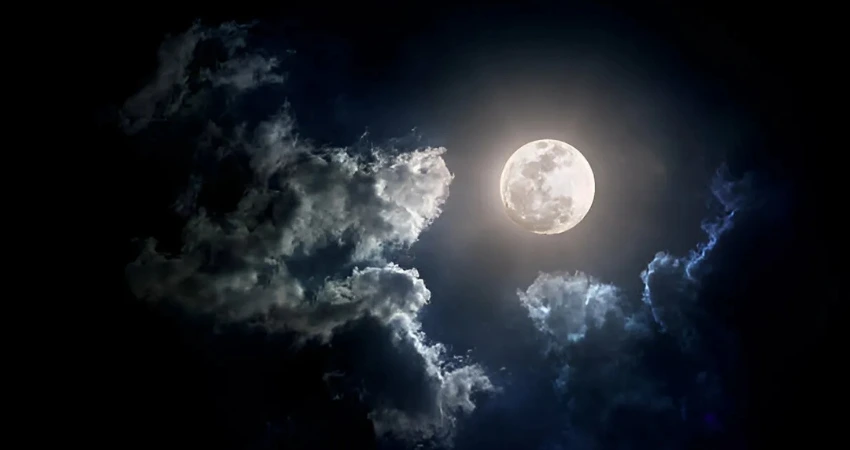
The Full Moon Day in Mythology: Divine Radiance and Cosmic Cycles
Moon phases are significant in Indian mythology, with the full moon day (Purnima) being especially revered as a time of divine connection, spiritual growth, and cosmic balance. In Hindu mythology, the Moon is honored as Chandra Dev, the cool and nourishing deity among the Navagrahas. Seated in his silver chariot drawn by swift antelopes, he spreads serenity and vitality across creation. The Moon is deeply linked with emotions, beauty, fertility, and nourishment.
These mythological narratives emphasize the full moon’s divine significance and its role in shaping destiny.
The Full Moon Day Grace – Purnima: The Sacred Significance
The Purnima, or full moon day, is not merely a lunar phase, it is a celestial celebration that threads through the heart of Hindu spirituality. Each month, when the Moon radiates in its fullness, it becomes a spiritual marker, carrying with it unique energy, divine stories, and cosmic blessings. The brilliance of the full moon is believed to magnify the power of prayers, rituals, and intentions, making this time a sacred canvas for devotion and transformation.
Purnima is associated with several significant events and deities in Hindu traditions:
Guru Purnima – Honoring the Guiding Light
In the month of Ashadha, the full moon rises as Guru Purnima, a day of deep reverence for our spiritual and academic teachers. The word Guru means “the one who dispels darkness”, and this day is dedicated to those enlightened souls who guide seekers from ignorance to wisdom. It is also the birth anniversary of Sage Veda Vyasa, the compiler of the Vedas, whose work preserves the foundation of eternal knowledge. Guru Purnima is thus a day to reflect on sacred teachings, express gratitude, and renew one’s commitment to the spiritual path.
Sharad Purnima – The Moon’s Ethereal Beauty
Celebrated in the month of Ashwin, Sharad Purnima is regarded as the most enchanting full moon of the year. Tradition holds that on this night, the Moon showers a celestial nectar believed to hold healing and purifying qualities. It is also the night of the Maha Raas Leela, the divine dance of Lord Krishna and the Gopis under the moonlit sky. Devotees prepare Kheer (sweet rice pudding) and place it beneath the moonlight overnight, believing it absorbs this divine essence and becomes a sacred elixir for health and vitality. Sharad Purnima is celebrated as a night of spiritual romance, beauty, and magic.
Kartik Purnima – A Day of Cosmic Cleansing
The full moon of the Kartik month is known as Kartik Purnima, one of the most auspicious days for purification. Devotees take holy dips in sacred rivers, seeking to cleanse past karmas and invite spiritual merit. It also commemorates Lord Shiva’s victory over the demon Tripurasura, after which He was honored with the title Tripurari. Simultaneously, it marks Lord Vishnu’s awakening from his cosmic slumber. Thus, Kartik Purnima carries a dual sanctity, uniting the paths of Shaivism and Vaishnavism, and is marked by charity, rituals, and devotion.
Buddha Purnima – A Triple Blessing
Observed on the Vaishakha Purnima, Buddha Purnima holds profound significance across traditions. It marks the birth, enlightenment, and Nirvana of Gautama Buddha, embodying a triple blessing of spiritual evolution. This sacred day is a reminder of the path of compassion, mindfulness, and inner peace, inspiring seekers to realize the potential of the soul to attain enlightenment.
Chaitra Purnima – The Birth of Devotion
The full moon of Chaitra brings the celebration of Hanuman Jayanti, the birth of Lord Hanuman, son of the wind-god Vayu. Hanuman symbolizes strength, humility, loyalty, and unwavering devotion to Lord Rama. On this day, devotees honor his courage, service, and divine love by chanting hymns, offering prayers, and performing rituals. Chaitra Purnima reminds us of the power of surrender and devotion, guiding seekers toward fearlessness and faith.
The Purnima is far more than a luminous night, it is a sacred moment when the Moon becomes a mirror of the soul. Each full moon carries its own energy and blessing, reminding us of the eternal cycle of growth, renewal, and devotion.
These nights inspire us to turn inward, to honor the divine within, and to align our lives with the cosmic harmony that the Moon so gracefully reflects.
By embracing the light of Purnima or the light of Full Moon Day, we invite clarity, peace, and spiritual awakening into our hearts.These mythological narratives emphasize the full moon’s divine significance and its role in shaping destiny.
The Moon in Vedic Astrology: The Mind and Emotions
In Vedic astrology, the Moon (Chandra) is the karaka (significator) of the mind. It governs emotions, intuition, memory, and maternal instincts.
Vedic astrology recognizes the full moon as a moment of peak lunar energy, influencing emotions, relationships, and spiritual pursuits. The Full Moon day is often used for performing religious rituals, fasting, and meditation to harness its powerful vibrations.

Many astrologers advise using this time for self-reflection and intention-setting, as the moon’s energy amplifies manifestation abilities.
A strong Moon blesses one with emotional balance, empathy, creativity, charm, and intuition. Such individuals radiate warmth, attract harmony, and often gain recognition.
When weak or afflicted, the Moon may cause emotional instability, mood swings, anxiety, indecision, or lack of confidence. In severe cases, it may lead to psychological unrest, overthinking, or isolation.
Full Moon Day Force Explained in Astrology
The Full Moon day (Purnima) is one of the most powerful alignments in astrology, when the Sun and Moon stand directly opposite each other in the sky. In this cosmic harmony, the Moon reflects the full radiance of the Sun, creating a surge of energy that strongly influences the mind, emotions, and inner awareness.
Astrologically, the Moon governs the mind, emotions, and intuition, while the Sun represents the soul, vitality, and purpose. On a Full Moon, these energies mirror each other in perfect polarity, heightening sensitivity, clarity, inspiration, and spiritual awareness. This is why people often experience heightened emotions, vivid dreams, or restless energy under its glow. It is also regarded as the most auspicious time for meditation, prayer, healing, and setting intentions, since the lunar force magnifies both conscious thoughts and subconscious desires.
Astrologically, the Full Moon also acts as a cosmic mirror, reflecting inner emotions and subconscious thoughts. The heightened lunar force can either stabilize or destabilize an individual, depending on the planetary alignments in their birth chart. A strong Moon during Purnima can bring clarity, fulfillment, and deep emotional awareness, whereas an afflicted Moon may result in mood swings, confusion, and restlessness. Rituals such as chanting, meditation, and offering prayers can help balance its effects.
In Vedic astrology, the Full Moon is considered a moment of illumination and fulfillment, symbolizing completion, abundance, and spiritual awakening. It encourages us to release burdens of the past and open ourselves to new beginnings. The force of Purnima thus becomes a cosmic magnifier, shining light not only on the external world but also upon the hidden depths of the inner self.
Half Moon: A Lunar Midpoint
The Half Moon, also known as the First Quarter or Last Quarter, stands as a powerful midpoint in the lunar journey. It is a moment of balance and transition, where half the Moon shines in light while the other half rests in shadow, reminding us of the eternal dance between illumination and introspection.
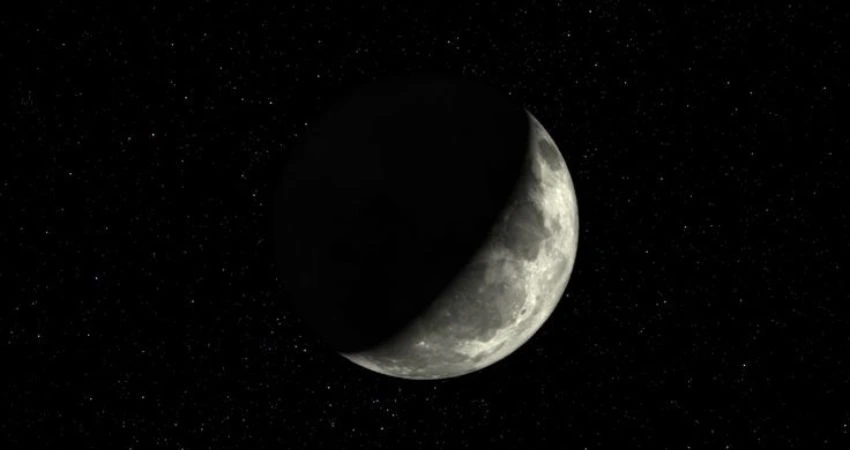
During the First Quarter Moon, the Moon has completed a quarter of its orbit, showing half of its radiant face to the Earth. Astrologically, this phase symbolizes growth, action, and forward movement. It urges us to make decisions, overcome obstacles, and channel energy into building what was initiated during the New Moon. It is a time of courage, determination, and laying foundations.
The Last Quarter Moon, on the other hand, occurs as the cycle begins to wane, when the opposite half is illuminated. This phase carries the energy of release, reflection, and spiritual cleansing. It invites us to let go of attachments, complete unfinished matters, and prepare the mind and soul for the renewal that comes with the next New Moon.
Spiritually, the Half Moon embodies the lesson of duality and balance. It reminds us that both light and shadow coexist within us, and harmony comes not from denying either, but from accepting both. In this way, the Half Moon serves as a cosmic teacher, guiding us to honor progress, embrace change, and prepare for transformation.
Half Moon Day in Indian Mythology
In Indian mythology and tradition, the Half Moon holds profound symbolic significance. It is observed during the Shukla Paksha Ashtami (the 8th day of the waxing Moon) and the Krishna Paksha Ashtami (the 8th day of the waning Moon). Yet, its most timeless and iconic association is with Lord Shiva.
Lord Shiva is often depicted with the half-moon (Ardha-Chandra) resting upon his matted locks. This sacred emblem represents the cyclical nature of time, mastery over the mind and emotions, and the eternal balance between creation and destruction. The half moon on Shiva’s head reveals the deeper truth that all life moves through phases, ever-changing, yet bound by the rhythm of the cosmic order.
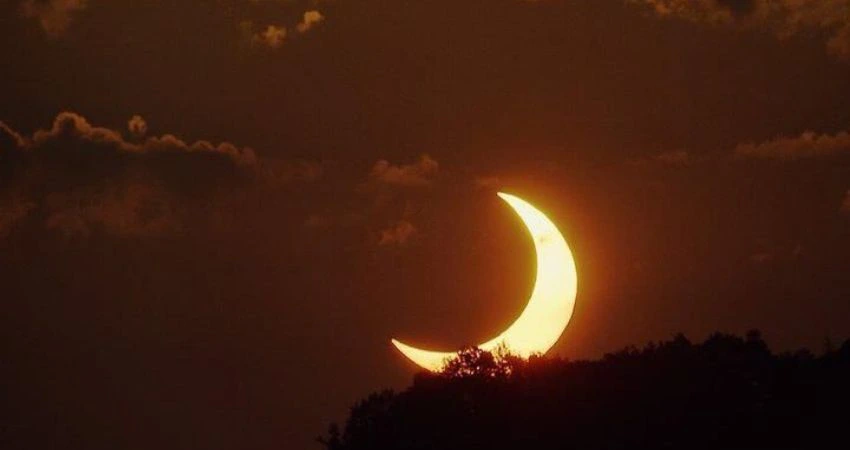
In the Hindu calendar, the lunar phases serve as guiding markers to determine auspicious days, fasts (vrats), and festivals. Certain rituals, meditations, and spiritual practices are especially performed on half-moon nights, as they are believed to carry powerful subtle energies ideal for introspection, discipline, and inner transformation.
[ Note:(Interpretation):
What is a waxing and waning moon? Ans:- A waxing moon is a moon that gets more sunlight on it as the days go by. It is after we experience a new moon up to a full moon. A waning moon is after the full moon and will remain waning until we again experience a new moon. One quick way to tell if a moon is in a waxing or waning phase is which side of the moon is the shadow on. If the shadow is on the right, like it is today, we are in a waning phase. If the shadow is on the left, then we are waxing and heading towards a full moon. An easy way to remember is to rhyme bright and right. If the moon is bright on the right, it is waxing.]
The Human Connection
The Half Moon also reflects the journey of human life. Just as one side of the Moon shines while the other rests in shadow, we too hold both light and darkness within us. The waxing half moon inspires growth, focus, and determination, urging us to act upon our goals. The waning half moon invites release, letting go, and reflection, reminding us that endings are not loss, but preparation for renewal.
Thus, the Half Moon becomes a cosmic teacher, reminding us of the need for balance, self-control, and acceptance of change. To honor its energy is to walk in harmony with the cycles of nature and the flow of life itself.
Moon’s Role in Vedic Astrology
In Vedic astrology, the Moon (Chandra) is revered as the karaka (significator) of the mind, governing our thoughts, emotions, and intuition. It reflects the maternal principle, symbolizing nurturing instincts, sensitivity, and the subconscious realm. The Moon influences our emotional stability, the way we connect with others, and the rhythm of daily life, mirroring its own waxing and waning cycles.
A well-placed Moon in the horoscope brings mental clarity, inner peace, creativity, and emotional balance. Such individuals often radiate compassion, receptivity, and intuitive wisdom, naturally attracting harmony into their lives.
Conversely, a weak or afflicted Moon may create emotional turbulence, anxiety, indecision, or restlessness of mind. It can cloud judgment, weaken confidence, and lead to inner dissatisfaction. Beyond this, the Moon also governs memory, imagination, fertility, adaptability, and maternal relationships, while spiritually acting as a mirror of the soul, guiding seekers toward self-awareness and inner harmony.
Full Moon Day: Ritual Guide
The Full Moon Day carries a unique vibration of illumination, release, and renewal. Engaging in mindful practices on this day allows you to align with its celestial rhythm and draw its blessings into your life.
1. Moon Gazing Meditation
Sit comfortably under the moonlight or by a window where the Moon is visible. Close your eyes, breathe deeply, and visualize the Moon’s silvery light entering your heart, cleansing negativity, and filling you with serenity.
2. Water Charging Ritual
Place a copper or silver vessel filled with water under the Moon overnight. Drink this energized water the next morning to harmonize your emotions, balance the mind, and invite calmness into your being.
3. Release Writing Practice
On paper, write down emotions, habits, or patterns you wish to release. With mindful intention, tear or safely burn the paper, symbolizing freedom from what no longer serves your soul’s journey.
4. Chanting & Mantras
Chant the Chandra Beej Mantra – “Om Som Somaya Namah” or softly recite affirmations of peace and clarity. The vibrations synchronize your inner energy with the Moon’s calming frequency.
5. Acts of Gratitude & Charity
Offer white foods (milk, rice, or sweets) to the needy, feed animals, or light a diya (lamp) in honor of the Moon. These acts expand the nurturing energy of the Full Moon within your life.
These simple yet profound rituals harmonize the mind, body, and spirit, helping you channel the luminous force of the Full Moon Day into healing, balance, and growth.
The Moon’s Strongest Placements in the Horoscope
Aspects of Moon in Vedic Astrology
When positioned in the Fourth House, the Moon rests in its most potent and harmonious domain. This house governs home, emotions, comfort, and inner peace, making it the Moon’s natural seat of strength. In this placement, the Moon’s nurturing and protective qualities shine brightly, weaving a personality deeply rooted in family bonds, traditions, and emotional security. Such individuals often display a serene nature and strong intuition, both for their own feelings and for those of others.
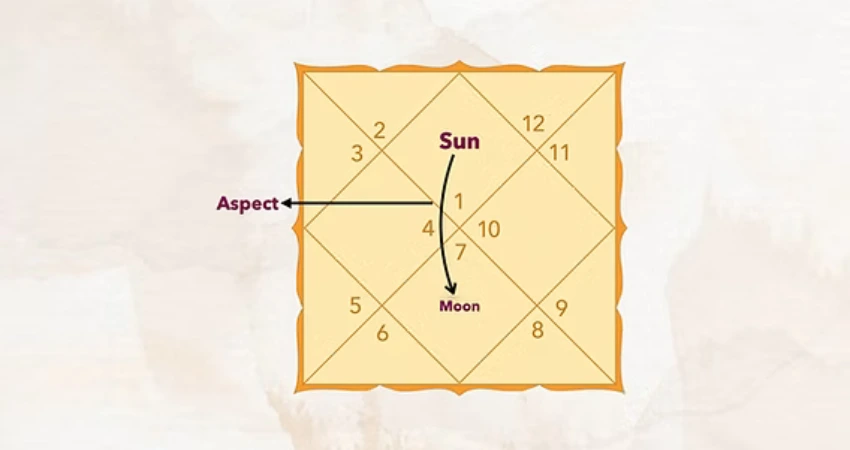
The Moon also thrives in the Ascendant (First House), where it directly shapes a person’s core identity. Here, a well-placed Moon enhances charm, empathy, and intuitive wisdom, giving the individual a magnetic presence that naturally draws others. In this position, the mind and emotions become central to outward expression, blessing the native with warmth, receptivity, and emotional depth.
A strong Moon in either of these houses typically bestows a balanced, emotionally secure, and content personality. Such individuals not only discover peace and fulfillment within themselves but also create a nurturing and harmonious environment for those around them. Their ability to blend inner calm with emotional intelligence makes them natural sources of comfort, stability, and guidance.
Best House for Moon in Vedic Astrology
The Moon is most powerful in the fourth house, as it relates to home, emotions, and inner peace. It also thrives in the ascendant (first house), enhancing charm, mental strength, and intuition. A well-placed Moon in these houses often results in a balanced and content personality.
Full Moon Day’s Influence on Personality
Individuals born on a full moon day often exhibit:
- Heightened emotional intelligence
- Creative and artistic inclinations
- Deep intuition and empathy
A magnetic personality that attracts attention
The Moon’s Journey Through the Twelve Houses
A Guide to Emotional Expression, Nurturance & Remedies
The Moon, ever-changing and radiant, governs our emotions, instincts, and inner world. It reflects how we respond to life, how we nurture ourselves, and where we feel most secure and comforted.
As it moves through the twelve houses of the horoscope, the Moon reveals the hidden patterns of our mind, heart, and soul. Each house it occupies shows where we seek belonging, where we feel vulnerable, and where we shine with tenderness. To understand the Moon is to understand the rhythm of our inner tides.
1st House (Ascendant)
Sensitive, intuitive, and expressive. The personality reflects moods like a mirror, often creating a gentle charm that draws others in. Such natives are deeply responsive to their environment.
Guidance: Strengthen inner stability through meditation, spend time near water, and wear a Pearl for emotional balance.
2nd House
Emotions link with wealth, family traditions, and food. Security is tied to stability in resources and emotional warmth within the family.
Guidance: Practice moderation in finances and diet. Offering milk, food, or grains in charity brings peace.
3rd House
Blesses one with an imaginative mind and expressive communication. They bond closely with siblings, and their emotions often find release through writing, speech, or creativity.
Guidance: Keep a journal, engage in daily chanting, and take short spiritual journeys for clarity.
4th House
Creates deep emotional roots. Such natives cherish home, love for the mother, and carry a nurturing aura. Their inner peace is tied to family bonds and domestic harmony.
Guidance: Care for the mother. Light a lamp daily at home to invite calmness and protection.
5th House
Enhances creativity, romance, and joy. These individuals find emotional fulfillment in children, arts, and expressions of love.
Guidance: Channel emotions into art, music, or writing. Offer white sweets to children as a gesture of blessings.
6th House
Influences health, service, and routines. Sensitive to stress and may absorb the worries of others, but shine in healing and service-oriented work.
Guidance: Maintain a balanced lifestyle and diet. Support the sick or needy and donate milk-based foods for harmony.
7th House
Emotional fulfillment is sought through relationships. Partnerships bring comfort but may also create emotional dependence.
Guidance: Nurture self-love. Practice moon-gazing on full moon nights to harmonize relationships.
8th House
Deepens emotional intensity and draws the native toward mysteries, transformation, and hidden truths. Emotional bonds may feel karmic and consuming.
Guidance: Meditate, chant ‘Om Namah Shivaya’, and respect the element of water to stabilize emotions.
9th House
Longs for wisdom, spirituality, and sacred journeys. Such natives are drawn to teachers, philosophy, and distant lands.
Guidance: Show reverence to gurus and elders. Read scriptures and visit holy places for inner clarity.
10th House
Ties emotions to career, recognition, and public life. These individuals thrive in professions involving care, leadership, or service.
Guidance: Maintain humility in career matters. Offer white flowers in devotion and serve mothers or women for blessings.
11th House
Connects emotions with friends, communities, and collective dreams. Such natives find joy in social bonds and nurturing groups.
Guidance: Choose friends wisely. Engage in community prayers or service to align emotions with collective good.
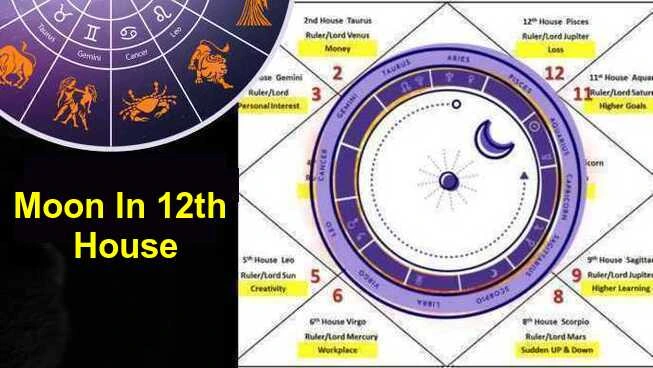
12th House
Turns inward, making one intuitive, mystical, and compassionate. Sensitive to unseen energies and often find solace in solitude.
Guidance: Practice meditation, perform seva (selfless service), and cultivate peaceful sleep routines for balance.
Quick Reference Table
| House | Emotional Traits | Guidance / Remedy |
|---|---|---|
| 1st | Sensitive, intuitive, moods reflected in personality | Grounding, Pearl, water connection |
| 2nd | Security from wealth, family, food | Moderation, donate milk/food |
| 3rd | Imaginative, close with siblings, expressive | Journaling, chanting, pilgrimages |
| 4th | Strong roots, love for home, mother | Honor mother, light a lamp |
| 5th | Creative, romantic, artistic joy | Pursue arts, offer white sweets |
| 6th | Sensitive to health, thrives in service | Balanced routine, help the sick |
| 7th | Emotional tie to relationships, dependency risk | Self-love, moon-gazing |
| 8th | Intense, drawn to mysteries, transformation | Meditation, Om Namah Shivaya |
| 9th | Seeks wisdom, spirituality, travel | Respect gurus, study texts |
| 10th | Emotions tied to career, recognition | Serve women, offer white flowers |
| 11th | Secure with friends, communities | Community prayers, choose friends wisely |
| 12th | Mystical, intuitive, seeks solitude | Meditation, seva, peaceful sleep |
Remedy & Guidance:
Practice meditation, prayer, and seva (selfless service). Sleeping with a calm mind and avoiding overthinking before rest restores balance.
As A Final Point –
The Moon’s placement reveals how we love, nurture, and heal ourselves. Each house reflects a unique emotional rhythm and a lesson for the soul. By honoring these lessons and embracing simple remedies, one learns to balance heart and mind, finding the path to true inner harmony.
When the Moon is Weak or Afflicted
If the Moon is weak, waning, or afflicted by malefic influences in the Fourth House or Ascendant, its harmony may be disturbed. Instead of peace, one may face emotional instability, insecurity, or restlessness. In the Fourth House, this can appear as disconnection from roots, lack of comfort, or inner dissatisfaction. In the Ascendant, it may manifest as mood swings, over-sensitivity, self-doubt, or emotional dependency on others.

To balance such effects, Vedic remedies are advised — including meditation, mantra chanting, devotion to deities like Lord Shiva or Chandra, strengthening connection with water, and leading a calm, mindful lifestyle. These practices help restore the Moon’s grace, bringing back emotional strength, resilience, and clarity.
Remedies for Weak Moon in Vedic Astrology
To harmonize and strengthen the Moon’s energy, traditional Vedic remedies include:
- Chanting mantras: Recite *“Om Som Somaya Namah”* with devotion.
- Wearing gemstones: Pearl or moonstone, selected with astrological guidance.
- Fasting on Mondays and offering prayers to Lord Shiva.
- Drinking water stored in a silver vessel, or water charged under moonlight.
- Charity: Feeding cows or donating white foods such as rice, milk, or sweets.
- Meditation and moon gazing: Sitting under the moonlight to quiet the mind and absorb its healing vibrations.
Extra Remedies
- Drinking water stored in a silver vessel
- Feeding cows and offering white-colored sweets
- Practicing meditation under the moonlight
Moon and Health
“The Moon as Guardian of Vital Rhythms”
The Moon governs our bodily fluids, digestion, and the subtle balance of the mind and emotions. Its gentle waxing and waning reflect the natural cycles of rest, renewal, and emotional flow, reminding us that health is deeply connected with rhythm and harmony.
“The Blessings of a Strong Moon”
When the Moon is strong and well-placed, it nurtures mental balance, encourages peaceful sleep, strengthens the digestive fire, and maintains stability in the hormonal and reproductive systems. Such individuals often radiate a calm presence and carry an aura of serenity and emotional strength.
“Challenges of an Afflicted Moon”
A weakened or afflicted Moon can disturb sleep patterns, create fluctuating moods, heighten anxiety, and invite stress-related ailments. Since the Moon governs the mind, its imbalance may manifest as emotional sensitivity, instability, or inner restlessness.
“Pathways to Nurture Lunar Well-being”
Balancing the Moon requires gentle care of both body and soul. Practices such as moonlight walks, meditation, and following calm daily routines restore balance. Nourishing the system with milk, rice, and cooling foods helps bring back inner radiance and emotional peace.
“Moon Remedies for Health & Balance”
Dietary Support: Favor milk, curd, rice, and other cooling foods to calm lunar imbalances.
– Lifestyle Practices: Maintain a steady sleep cycle, spend time in nature, and take walks under the moonlight.
Closing Reflection
To care for the Moon within is to honor our emotional tides and inner light. By cultivating harmony in the mind and body, one walks the path of balance, serenity, and lasting well-being.
Professions Ruled by the Moon
The Moon, with its gentle radiance, nurturing influence, and intuitive strength, draws souls toward paths where care, creativity, and empathy are central guiding them into vocations such as healing and healthcare (nursing, therapy, and holistic practices), artistic and creative expression (writing, music, painting), hospitality and culinary fields that bring comfort and nourishment, and astrology or spiritual guidance, where its calming presence awakens intuition and offers insight to seekers.
Healing and Healthcare
The compassionate nature of the Moon makes it deeply aligned with professions in nursing, therapy, counseling, and natural healing. These callings reflect the Moon’s role as a tender caretaker, offering comfort, restoration, and emotional support to those in need.
Artistic and Creative Pursuits
The Moon as muse often inspires writers, poets, musicians, and painters, blessing them with heightened imagination and sensitivity. Under its influence, emotions are transformed into artistic expression, weaving beauty and depth into creative works that touch the heart.
Hospitality and Culinary Arts
Linked with nourishment and the warmth of care, the Moon favors vocations within the culinary world, hospitality, and roles that bring comfort to others. These paths mirror the Moon’s essence as a provider of sustenance and emotional wellbeing.
The Moon and Spiritual Growth
The Moon, with its soft radiance and calming presence, holds a sacred place in one’s spiritual journey. Acting as the mirror of the soul, it governs the flow of emotions, intuition, and inner receptivity, guiding individuals closer to their higher self. When the Moon is harmoniously placed, it awakens spiritual awareness, opening the heart and mind to subtle divine energies and attuning the soul to the unseen realms.
Sacred Lunar Practices
Engaging in sacred practices allows one to consciously absorb the Moon’s grace:
- Moon Gazing – Sitting quietly under the moonlight calms the mind and deepens the connection with inner stillness.
- Meditation – Practicing meditation during lunar hours enhances clarity, intuition, and emotional balance.
- Mantra Chanting – Chanting under the gentle glow of the Moon strengthens spiritual vibrations, purifies the heart, and awakens inner peace.
These practices nurture tranquility, expand consciousness, and build a bridge between the material and spiritual worlds.
The Role of Lunar Phases
Each phase of the Moon carries unique spiritual significance:
- New Moon – Symbol of renewal, silence, and intention-setting. A powerful time to plant seeds for spiritual and personal growth.
- Waxing Moon – Period of expansion, courage, and building energy. Ideal for progress and learning.
- Full Moon – The peak of lunar energy, offering illumination, clarity, and the strength to release burdens or limiting patterns.
- Waning Moon – A sacred time of reflection, letting go, and preparing the soul for inner transformation.
By aligning with these natural rhythms, one’s spiritual practices gain depth and flow with greater ease.
The Moon as a Spiritual Guide
Ultimately, the Moon is not merely a celestial presence but a profound spiritual teacher. Its cycles remind us of life’s eternal dance of renewal, growth, culmination, and release. By honoring its gentle rhythm, seekers find inner harmony, awakened consciousness, and a steady path toward spiritual awakening.
“The Moon whispers softly, teaching us that stillness and rhythm are both necessary for the soul to bloom.”
Conclusion: The Moon Shows the Strength of Your Brain
The Moon, ever radiant and gentle, is more than Earth’s celestial companion it is the mirror of the mind, the guardian of emotions, and the awakener of spiritual awareness. Whether seen through the lens of science, revered in mythology, or honored in Vedic astrology, the Moon remains a timeless guide to humanity. By attuning ourselves to its phases, nurturing its energy within, and embracing its lessons of rhythm, renewal, and balance, we invite clarity, peace, and transformation into our lives. To honor the Moon is to honor the cycles within ourselves an eternal dance of light and shadow, guiding us ever closer to harmony and inner awakening.
A well-positioned or strong Moon can illuminate one’s path to wisdom, peace, and success, whereas a weak Moon may cloud judgment and lead to disturbance. You can unlock your full potential by understanding its placement in your birth chart and aligning with its energy.
As you have gone through this entire Vedic astrology blog and have interest in these things, you know that by reviewing the planetary position of your Birth Chart or Palm Reading or through Vastu, Sastra, an expert astrologer may dissolve your past bad Karmas, as well as push you on the path of success & blessings to achieve yet unmanaged problems with the help of remedies like Stones, Gems, Tantras & Mantras or Rudraksha Tree, etc. So visit www.astrologystarts.com/shop to explore consultancy services & get benefited.
FAQS
Is today full Moon day in India?
To check if today is a full moon day in India, refer to the latest Hindu calendar or astronomical charts. Full moons occur once a month, and their exact timing depends on the lunar cycle.
Is there a full moon every 29 days?
Yes, a full moon occurs approximately every 29.5 days, marking the completion of the lunar cycle. This is the time when the Moon is fully illuminated by the Sun.
Which God is on full moon day?
Lord Vishnu and Goddess Lakshmi are widely worshipped on full moon days (Purnima). It is believed that divine blessings and prosperity increase when prayers are offered on this sacred day.
Why is full moon day celebrated?
Full moon day, or Purnima, is celebrated for its spiritual, religious, and astrological significance. It is a time of high energy, ideal for meditation, fasting, and performing sacred rituals to attract peace and positivity.
Is every 14 days a full moon?
No, a full moon occurs roughly every 29.5 days. Every 14-15 days, the Moon transitions from new moon (Amavasya) to full moon (Purnima) and vice versa.
What is the meaning of full moon?
The full moon day represents completion, radiance, as well as heightened emotions. It is a time when the lunar energy is at its peak, influencing human emotions, tides, and spiritual practices.
What is the most beautiful moon name?
The most beautiful moon name is often considered “Sharad Purnima”, as it is associated with divine love, celestial beauty, and Krishna’s Raas Leela under the radiant moonlight.
Is full moon a lucky day?
Yes, full moon day is considered highly auspicious in many cultures. It is linked to prosperity, wisdom, and spiritual growth, making it an ideal day for rituals and prayers.
Which Hindu god is moon?
In Hinduism, the Moon (Chandra Dev) is a deity representing emotions, mind, and nourishment. He is also linked to Lord Shiva’s matted locks and is one of the Navagrahas (nine planetary gods).
Why is the moon important?
The Moon governs emotions, mind, and tides, playing a crucial role in Vedic astrology, spirituality, and human well-being. It influences mental stability, relationships, and overall planetary harmony.
Who is moon’s wife?
The Moon god, Chandra Dev, is married to 27 Nakshatras (constellations), daughters of Daksha Prajapati. However, his favorite wife is Rohini, known for her beauty and grace.
What is the Lunar Rhythm?
A Full Moon Day marks the peak of lunar energy, when the Moon stands fully illuminated, symbolizing completion, clarity, and heightened emotional tides. It is often seen as a time of celebration, reflection, and spiritual practices in many Indian traditions.
So, while today may not be a Full Moon Day, it carries its own quiet power, a reminder that every phase of the Moon holds meaning, guiding us through cycles of growth, release, and renewal.
