
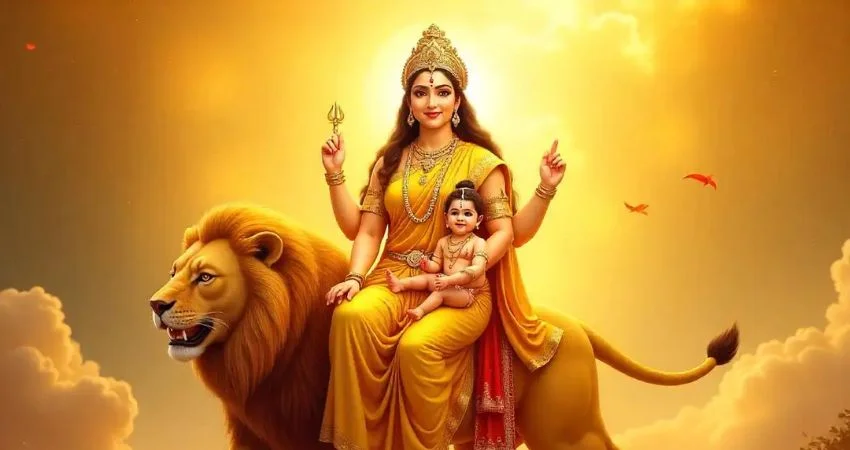
Skandamata – A Basic Introduction
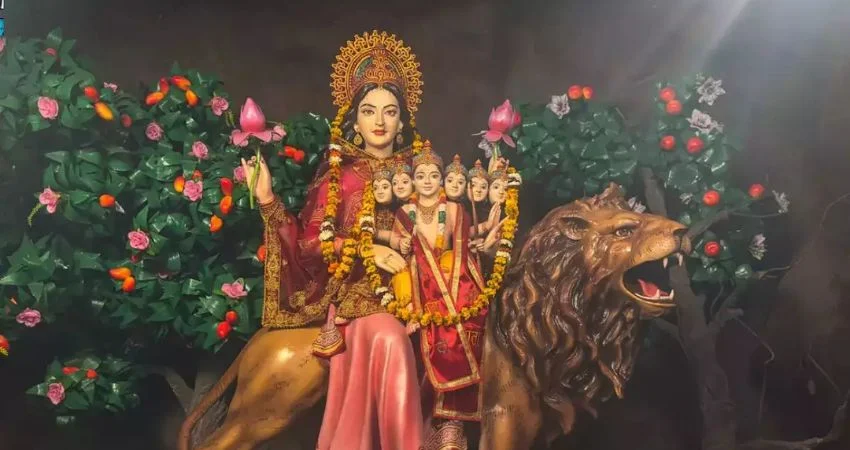
Maa Durga’s fifth form is called Skandamata. In this form she is the mother of Lord Skanda also known as Kartikeya. He is the commander of the divine army this form of Maa Durga shows the love, care and protection of a mother.
People worship Maa Skandamata for the health and well being of their families they also pray to her for good health and spiritual growth. Her blessings are believed to bring peace, positivity and protection into the lives of her devotees
Etymology and Definition

The name Skandamata comes from two Sanskrit words “Skanda” and “Mata.” “Skanda” refers to Lord Skanda or Kartikeya, while “Mata” means mother. So Skandamata means the mother of Lord Skanda who is known as a brave warrior and protector.
In this form Maa Durga shows the love of a mother who cares for her child and keeps him safe from harm.
Because of these qualities Skandamata has an important place in Hindu spirituality. People worship her and pray for their family’s well being, peace at home and strength in life.
Mythological Origins and Legends
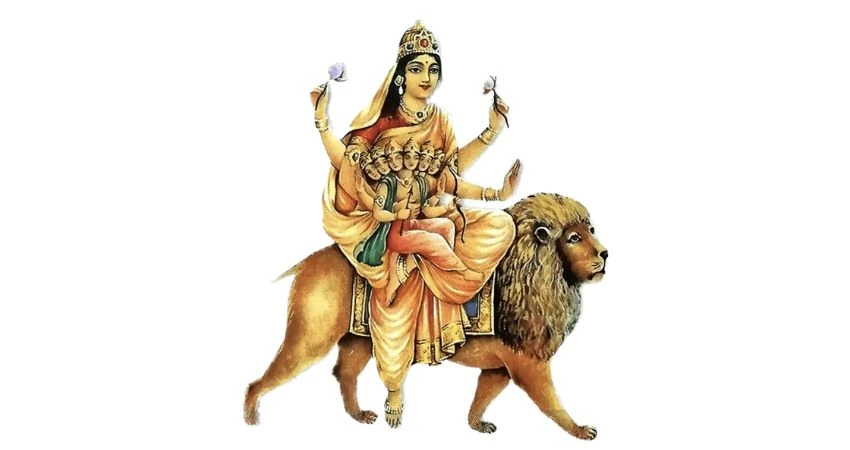
Skandamata is also connected with Hindu mythology. According to a popular story she took this form to protect and support her son Lord Skanda he was born to defeat a powerful demon named Tarakasura.
She stayed with Skanda and supported him as he was meant to end the demon’s rule. She protected him and stood by him with complete faith this story shows the deep love and care a mother has for her child.
Iconography and Symbolism

Pictures of Maa Skandamata often show her with four arms, each hand has something that has a special meaning. She rides a lion which shows her strength and power.
Maa Skandamata holds a lotus in one hand, the lotus is linked with purity and spiritual awakening. She also holds her son Skanda in her lap this shows the love and care of a mother for her child.
Learning about Skandamata Devi helps us understand more about her and why people worship her.
Weapons and Significance
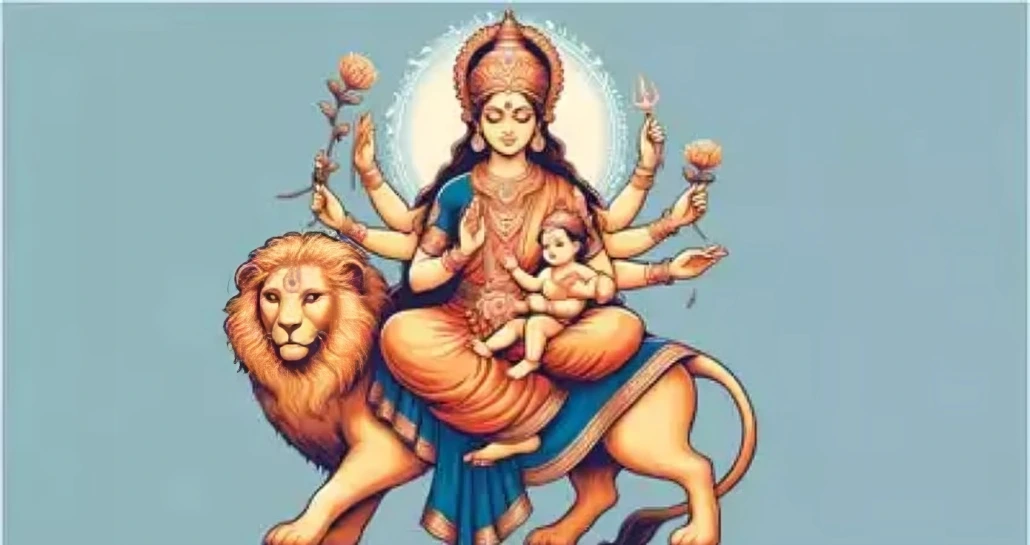
Skandamata is shown with different things in her hands each one has its own meaning for her devotees.
The lotus is one of the main symbols of Skandamata it is linked with purity, wisdom and spiritual awakening. A lotus grows in muddy water but still looks clean and beautiful in the same way Skandamata reminds her devotees to face difficult times and keep moving forward in life.
The sword is another symbol seen with Skandamata it shows her power to remove ignorance and negative things from the lives of her devotees it also shows her strength and her role as a protector.
Vahana (Vehicle)
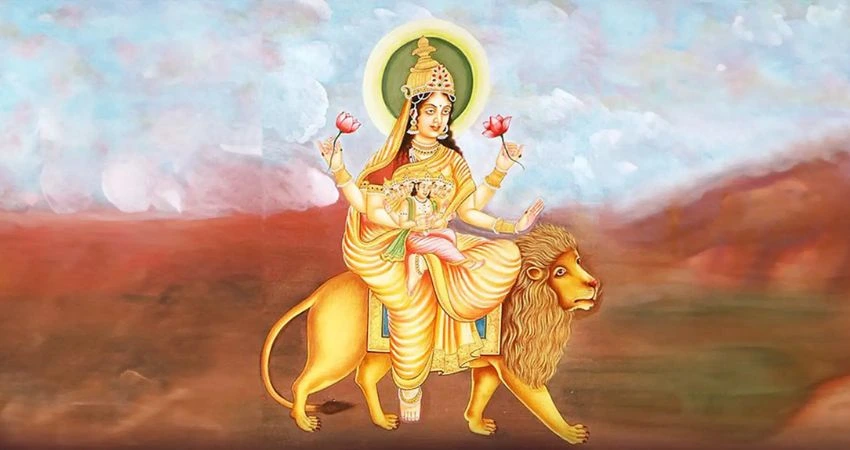
Skandamata is shown riding a lion, which is her vahana or divine vehicle te lion stands for courage, strength and fearlessness it shows that Maa Skandamata is strong and can help people face their fears and problems. The lion also shows her power and confidence.
The lion also shows her connection with nature it reminds us that people and nature are connected this form of Maa Skandamata shows both sides of her. She is a strong warrior but she is also a loving mother who cares for and guides her devotees.
Divine Appearance and Attire
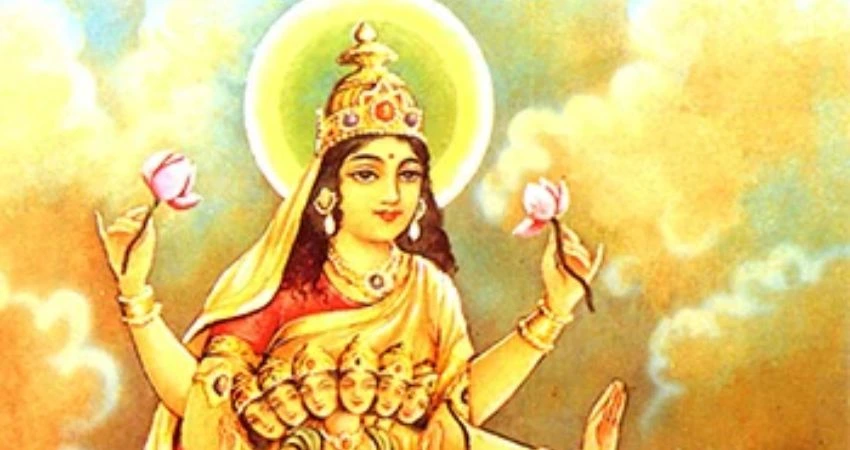
People know Skandamata for her beautiful and divine look many people feel inspired when they see her. She is often shown wearing bright green or yellow sarees. These colors are linked with fertility, prosperity and abundance they also show her caring and life-giving nature.
She is also seen as a source of positive energy and blessings. Her appearance gives a feeling of hope, protection and spiritual growth. Maa Skandamata wears beautiful jewelry which adds to her royal look as a goddess. Her appearance shows both sides of her. She is a loving and caring mother but she is also a powerful goddess.
Rituals and Celebrations

Many people start their day with the Morning Aarti of Devi Skandamata they sing devotional songs, pray to Maa and ask for her blessings and guidance for the day. Many devotees also keep a fast on this day they believe fasting helps keep the body and mind clean and helps them focus better during prayer.
Mantras and Prayers
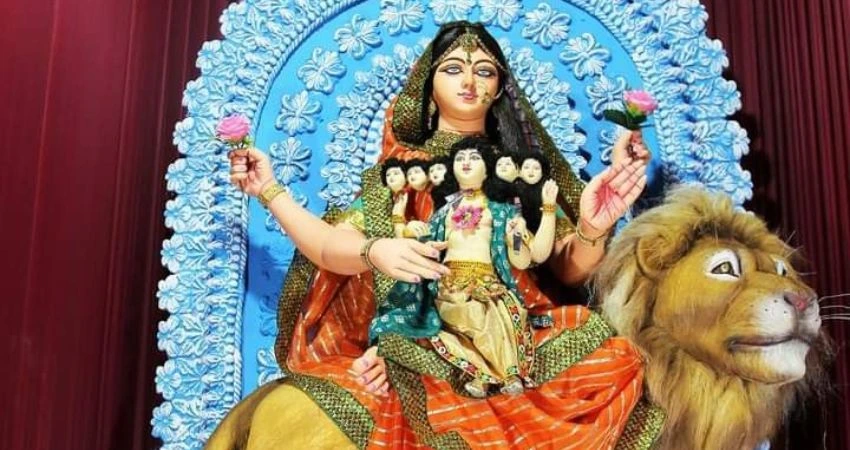
People chant mantras and say prayers for Skandamata to ask for her blessings and protection. Many people also believe that chanting helps create a positive feeling and brings them closer to Maa.
People chant the Skandamata Mantra “Om Devi Skandamatayai Namah.” They believe this mantra can bring strength, peace, and blessings into their lives the prayers for Maa talk about her love, wisdom and kindness. While saying these prayers people remember these qualities and try to bring them into their own lives.
Chanting these mantras and saying prayers during Navratri can create a peaceful atmosphere it also helps people stay focused during prayer and feel closer to Maa.
Embracing the Spirit of Skandamata
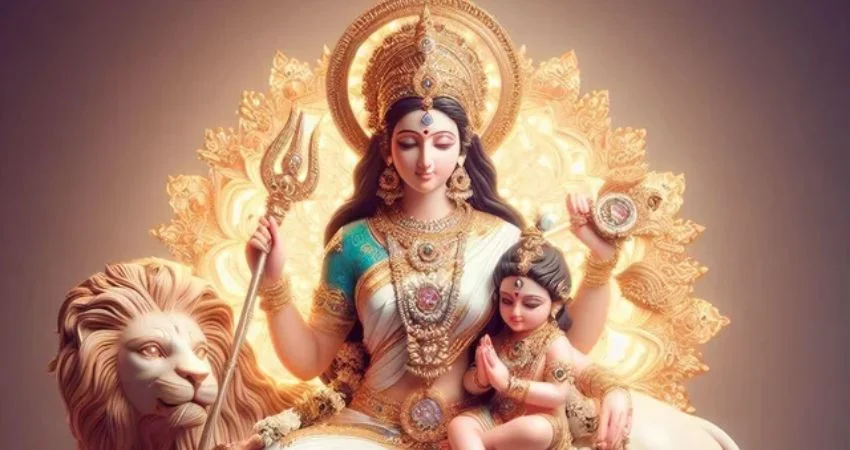
People not only celebrate Devi Skandamata during Navratri but also celebrate her caring love, strength and protection. With her blessings, people develop these qualities in themselves which helps them build a deeper spiritual connection with the divine.
People follow Skandamata’s teachings through prayers, rituals and devotion. Her story teaches people to be kind, brave, and faithful it also teaches them to face problems and stay strong.
If you want to learn more about astrology and spiritual guidance you can visit AstrologyStarts.com. You can find useful information, astrology resources and personal consultations there the website helps people learn more about their lives and understand their spiritual side.
FAQs (Frequently Asked Questions)
What is Skandamata the goddess of?
Skandamata is the goddess who represents motherhood and care. People know her as the mother of Lord Kartikeya and for the maternal love, care and protection she represents. She teaches compassion and strength. People pray to her for their family’s well being good health and spiritual growth. She shows the powerful and selfless nature of motherhood which makes her a respected goddess in Hindu tradition.
What are the benefits of Worshipping Skandamata?
Many people believe that remembering Skandamata can bring positive changes to one’s life. People especially pray to her for stronger family relationships and the good health and well being of their loved ones. She is believed to remove obstacles from people’s lives and protect them from negative energy. Spiritual growth and emotional balance help people develop patience, compassion and inner strength which are part of her teachings. She is a source of support and guidance for many people.
Which chakra is Devi Skandamata?
Devi Skandamata is linked with the Sacral Chakra. This chakra is related to feelings, creativity and relationship it also has a link with how we handle our feelings and how we treat the people close to us. This matches Maa Skandamata because she is known for her love and care. People believe that keeping this chakra balanced can help them have better relationships with their loved ones. It may also help them control their emotions and understand others better. Maa is also linked with creativity, peace and good emotional health.
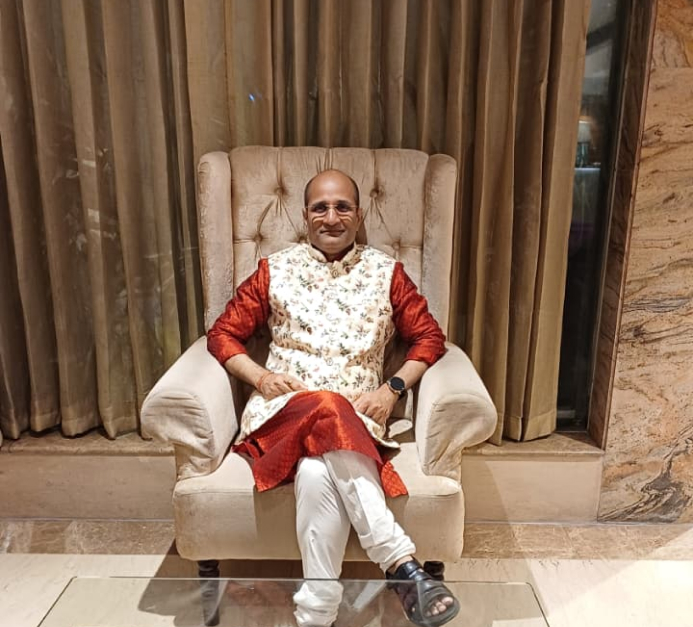
Acharya Shri Devesh Kumar Thakur Ji was born into a Maithili Brahmin family, and from childhood, he was blessed with knowledge of parapsychology and paranormal vision. His father was the Head of Department (HoD) of Archaeology at a government university, and his mother was a teacher at a government school. Both his maternal and paternal grandfathers retired from high-ranking positions in the Department of Education & Power Project, Government of India.
With the divine blessings from Matarani, Goddess Durga, Guruji started astrological predictions from childhood by looking at palms and foreheads. Along with formal education, Acharya ji was especially interested in Tantra-mantra, spirituality, meditation, and the presence and usage of invisible paranormal powers. Guruji had completed his M.B.A. in 1995. He had started his own business, and for 17 years he acted as a Managing Director in a Pvt. Ltd. company, and after that he had served as Sr. Vice President (Sr. V.P.) of a big IT company. And thereafter, he has taken responsibility for social service for the suffering people.
Hastarekha (Palmistry), Samudrik-shastra, Jyotisha (Astrology), Tantra, and Parapsychology were his natural fields of interest, and due to that, he had studied them deeply. As a worshiper of Devi Shakti since the age of 22, he spent many of his nights in the cremation ground (Shamshana) near Kalidas’s Ishta Devata, Maa Ucchaith Bhagawati, by performing Shamshan Sadhana to experience those paranormal energies or supernatural spirits.
He performed severe austerities (sadhana) for Maa Pitambari and Haridra Ganapati and accomplished many next-to-impossible tasks and, through various rituals across many families and societies, completed works that had stalled.