
Kaalratri: A Basic Introduction

Maa Kaalratri is the seventh form of Goddess Durga and is worshipped during Navratri where we celebrate the power and grace of the divine feminine. People know her for her fierce and powerful form she represents the destruction of evil and teaches us the importance of change that leads to new beginnings.
She has a dark and intense appearance that removes negativity and shows the victory of light over darkness. People pray to her for protection, courage, and strength to overcome the challenges and fears of their lives.
Maa Kaalratri is more than just a goddess of power. Her fearless form teaches people to face their fears, accept change, and move forward in life with confidence. Her blessings help people remove negativity from their lives.
Etymology and Definition

The name Kaalratri is a combination of two Sanskrit words “Kaal,” which means time or death and “Ratri,” which means night. Together this name represents the powerful and mysterious side of darkness and the changes in life. It reminds us that the darkest moments of our lives can lead to new beginnings.
Maa simply teaches people that challenges, endings, and difficult times are a natural part of life. Just as there is always a beautiful morning after a dark night darkness can also lead to growth, change and a fresh start.
Devi Kaalratri represents both destruction and change in her divine form she destroys evil and negativity clearing the way for positivity and new beginnings. She teaches us that destruction can also make way for creation. She is the source from which light comes out of darkness.
Mythological Origins and Legends

Maa Kaalratri has a very important role in Hindu mythology. One popular story tells us about her battle against the demon Raktabija who had a dangerous power: every drop of his blood that touched the ground would create another demon just like him. Because of this unique power all the gods thought it was impossible to defeat him and came to Maa for her help.
Birth of Kaalratri: Maa Kaalratri took her form from the combined divine energy of the goddesses to destroy the demon and protect the universe from darkness. Her dark form and appearance show that she can take a fierce form to destroy evil and restore balance.
Defeating Raktabija: Maa used her special powers and wisdom during the dangerous battle. Knowing about his unique power, she drank Raktabija’s blood before it could fall to the ground which stopped more demons from being created. She defeated Raktabija through this brave act and ended his threat to the world.
She is a powerful protector of dharma and people. Her story teaches us that even in the most difficult situations, divine strength and courage can overcome evil and bring back peace.
Iconography and Symbolism

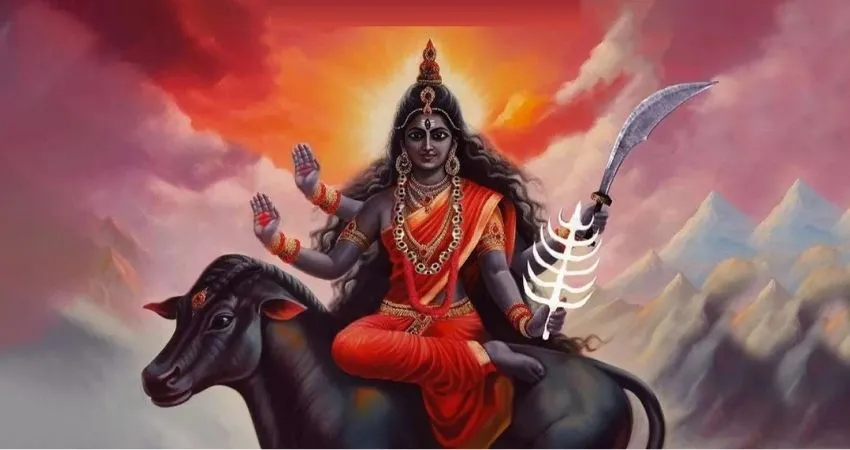
Maa Kaalratri’s powerful appearance teaches many things to the people who follow her. Her dark complexion represents night and the deep mysteries of the universe. Her expression and flowing hair represents her fearless and unstoppable nature.
- Four Arms: We can see Maa Kaalratri with four arms each arm is a symbol of her divine strength and abilities. There is a Sword in one hand which represents her power of destroying ignorance and negativity and in another hand there is a source of light which is a symbol that light of knowledge removes darkness and guides people on the path of truth and wisdom. The gesture of blessing and protection is formed from the other two hands of maa.
- Riding a Donkey: All other goddess choose to ride powerful animals like lions or tigers but Maa Kaalratri is seen riding a donkey. This unusual vahana symbolizes humility, patience and builts the ability in people to face lifes challenges with courage and determination.
All this symbolism of Devi Kaalratris appearance helps people understand deeper spiritual meaning of life. Every element of her form helps people in developing qualities within themselves courage, wisdom, humility and inner strength.
Weapons and Significance

Maa Kaalratri is seen holding powerful weapons in her hand and each weapon carries deep spiritual meaning. All These weapons are a representation of different aspects of strength and qualities she wishes to see in her devotees.
- Sword: The sword shows her power to remove ignorance, negativity and fear. It represents the courage and strength needed to overcome all the challenges in life. This symbol teaches people to face their fears with confidence and strong will.
- Trident: The trident represents the three parts of creation, protection and destruction showing her many roles it shows the balance of these forces in the universe and her ability to handle them.
These weapons represent her role as a warrior who always protects her people and removes difficulties from their lives. She teaches people to build inner strength, courage and wisdom to overcome the difficulties they face in life.
Vahana (Vehicle)

Maa Kaalratri is seen riding a donkey as her vahana which means a divine vehicle. Other goddesses are shown riding powerful animals like lions or tigers but Maa Kaalratri is shown riding a donkey. This represents humility, service and the ability to move through difficult situations in life with patience and determination.
- Symbol of Humility: This teaches people that true strength does not always come from power. Real strength is found in humility, dedication and the willingness to serve others. Maa teaches us that humility can give us great inner strength.
- Connection with the Earth: The donkey represents a strong connection with the earth and the practical side of life it teaches devotees to stay grounded and face difficulties with patience and hard work.
This unique part of Devi Kaalratri shows her powerful yet humble nature. It helps devotees develop strength, humility and courage while facing difficult situations in life.
Divine Appearance and Attire

The powerful and fierce appearance of Maa leaves a deep impression on the people who follow her. We can see her wearing black or dark blue sarees. These colors represent the night and the hidden mysteries of the universe she teaches that real strength can be found in darkness and change.
- Radiant Aura: Her complexion is always seen as dark and she is always surrounded by a bright glow. The glow on her face shows the divine energy and positivity she brings into the lives of her people the perfect balance between darkness and light can be seen which also reminds us that both destruction and creation are needed for the growth and renewal of the universe.
- Jewelry: Maa Kaalratri is also seen wearing beautiful and detailed jewelry which shows her royal nature as a goddess. These ornaments are a symbol of prosperity, abundance and blessings that come through faith and devotion.
Her powerful appearance shows devotees her protective strength and courage. It remindes people to accept their own uniqueness and face their fears with confidence.
Rituals and Celebrations

Maa Kaalratri is worshiped with devotion in Navratri. Devotees perform several rituals to seek her blessings, protection and guidance in their lives on this day.
- Aarti: People start the day with a morning aarti by praying to Maa for a positive day ahead during these prayers devotional songs are sung and lamps are offered to show gratitude to Maa. This helps bring her divine guidance and protection for the day ahead and also creates a peaceful and spiritual atmosphere all around.
- Fasting: Fasting is done by many people on this day to purify both the mind and body. Fasting is a way of showing dedication and devotion which helps devotees focus more deeply on prayers.
- Offerings: Flowers, fruits and sweets are offered to Maa Kaalratri by devotees as a symbol of love, faith and respect.
All These rituals help people feel close to devi and also helps in bringing people together for shared prayer and celebration during Navratri.
Mantras and Prayers

People chant mantras and prayers dedicated to Maa Kaalratri to receive her blessings and protection. People also believe that these chants help increase positive spiritual energy and create a deeper connection with the goddess.
- Kaalratri Mantra: One of the most powerful mantras that many people recite is “Om Devi Kaalratryai Namah.” Chanting this mantra brings courage, strength and protection from negative energy in one’s life. People recite this mantra during prayers to feel the divine presence around them.
- Prayers: Devotional prayers of Maa Kaalratri tell about her qualities of courage, wisdom and kindness these prayers teach devotees to develop these qualities in themselves and make their daily lives simpler.
One can create a peaceful and spiritual atmosphere by reciting these mantras and prayers during the Navratri festival it helps strengthen one’s spiritual focus and helps develop a connection with the divine energy of Maa Kaalratri.
Philosophical and Spiritual Significance

There is a deep spiritual and simple meaning behind worshiping Maa Kaalratri. She teaches people the power of change and reminds all her followers that destruction is needed for a new beginning. She helps us understand the importance of letting go and accepting change in life.
- Transformation: Maa Kaalratri represents that growth comes after difficult situations in one’s life. She makes our path easier by removing negative and harmful influences from our lives and helps us make positive change we learn to face our fears.
- Courage: She also teaches us courage and determination. By connecting with her, we understand that true strength comes from within. strength lies in the ability of facing challenges bravely and learning and becoming stronger from those challenges.
She teaches empowerment and spiritual growth. By following her people start pursuing their goals with confidence and move forward in life with faith.
Relevance in Modern Life

The teachings of Maa Kaalratri play a very important role in today’s busy world. She teaches that removing negativity and bringing positive change are very important for growth. She is a guiding force for people who are dealing with challenges in their lives.
- Embracing Change: Maa teaches people that change is a very important part of life. She is an example that helps people see challenges as chances to learn and grow from them.
- Overcoming Fear: We learn from her that fear is a natural feeling but we should never let it control our decisions. With her blessings people gain the confidence to face their fears and move forward with confidence. She motivates people to break their limits and start working on their dreams.
By following her teachings in our lives we can handle challenges with strength and patience. Maa Kaalratri inspires people to keep moving toward their goals with determination and faith.
Embracing the Spirit of Kaalratri

We celebrate Maa Kaalratri and her powerful qualities of change, courage and strength during Navratri. With her blessings people try to develop inner strength and build a good connection with the divine.
- Personal Growth: Personal growth is gained by worshiping Maa Kaalratri the faith of many devotees in her gives them the strength to deal with personal struggles. She reminds people that challenges can lead to growth and change.
- Community Connection: People come together with devotion to celebrate Navratri people worship Maa by sharing their experiences and supporting each other. This creates a feeling of unity among people and reminds them that they are connected through their devotion.
Prayers, rituals and faith describe the legacy of Maa Kaalratri worshiping her is a powerful experience that helps people connect with their inner strength and energy which guides them forward in life.
Conclusion

Maa Kaalratri is a powerful symbol of change, courage and strength. She teaches people to face their fears overcome negativity, and welcome change with faith in their lives. She teaches us about determination and inner strength through her example and sacred rituals.
We gain wisdom from Devi Kaalratri and feel motivated to bring these qualities into our lives. we learn this by being courageous letting go of all negativity in our lives and trusting in change. Her teachings remind us that every person has the strength to rise again after difficulties and grow through life’s challenges.
For all those who wish to explore astrology and spiritual guidance AstrologyStarts.com provides helpful resources, information and personal consultations. Our aim is to support individuals in understanding their life’s direction and connecting with more positive spiritual energy around them.
Maa Kaalratri’s blessings fill our lives with courage, wisdom and positivity she also guide us and help us face our challenges with confidence.
FAQs (Frequently asked Questions) :
Are Kali and Kalaratri the same?
Kali and Kaalratri are actually the same divine feminine energy where both forms represent the fierce, protective and powerful nature of the goddess who is believed to end evil and protect people.
Maa Kaalratri represents the destruction of darkness, fear and ignorance. She helps build the power needed to remove negativity and clear the path of life. She is connected with the power of time, change and transformation also she represents the cycle of creation and destruction.
Is Kaalratri good or bad?
Maa always protects her devotees from evil forces and negative energies in life. She represents the strength to destroy darkness and protect her devotees. She removes fear and negativity from the lives of people who have faith in her with her blessings people gain the courage and strength needed to overcome the challenges and problems of life. Despite her strong and powerful form Maa Kaalratri is a kind and caring goddess who guides her devotees toward protection, positivity and spiritual growth.
What is the power of the Kalaratri?
Maa Kaalratri removes darkness and evil from the world. She represents strength, courage and the fearless energy needed to remove negativity she gives protection and guidance when people face challenges in their lives. She protects people from harmful forces and negative influences. Maa Kaalratri plays a very important role in the spiritual journey of people who follow and believe in her. She inspires them to stay strong and move forward in life with confidence.
Why does Kalratri ride a donkey?
Maa Kaalratri’s vahana is a donkey which represents humility and patience the donkey represents the idea that true strength does not always come from power it shows a deep connection with the earth and life. It reminds people to stay grounded and face all the challenges of life with patience. Maa Kaalratri teaches that real strength lies in simplicity and the ability to move forward with grace even in difficult situations.
Acharya Shri Devesh Kumar Thakur Ji was born into a Maithili Brahmin family, and from childhood, he was blessed with knowledge of parapsychology and paranormal vision. His father was the Head of Department (HoD) of Archaeology at a government university, and his mother was a teacher at a government school. Both his maternal and paternal grandfathers retired from high-ranking positions in the Department of Education & Power Project, Government of India.
With the divine blessings from Matarani, Goddess Durga, Guruji started astrological predictions from childhood by looking at palms and foreheads. Along with formal education, Acharya ji was especially interested in Tantra-mantra, spirituality, meditation, and the presence and usage of invisible paranormal powers. Guruji had completed his M.B.A. in 1995. He had started his own business, and for 17 years he acted as a Managing Director in a Pvt. Ltd. company, and after that he had served as Sr. Vice President (Sr. V.P.) of a big IT company. And thereafter, he has taken responsibility for social service for the suffering people.
Hastarekha (Palmistry), Samudrik-shastra, Jyotisha (Astrology), Tantra, and Parapsychology were his natural fields of interest, and due to that, he had studied them deeply. As a worshiper of Devi Shakti since the age of 22, he spent many of his nights in the cremation ground (Shamshana) near Kalidas’s Ishta Devata, Maa Ucchaith Bhagawati, by performing Shamshan Sadhana to experience those paranormal energies or supernatural spirits.
He performed severe austerities (sadhana) for Maa Pitambari and Haridra Ganapati and accomplished many next-to-impossible tasks and, through various rituals across many families and societies, completed works that had stalled.